Book Review: Suplex & Sorcery, by June Orchid Parker
“…In other words, the story really is a love letter to professional wrestling, and it shows, in a lighthearted and fun way, how a wrestling league might form in a sword and sorcery city.”
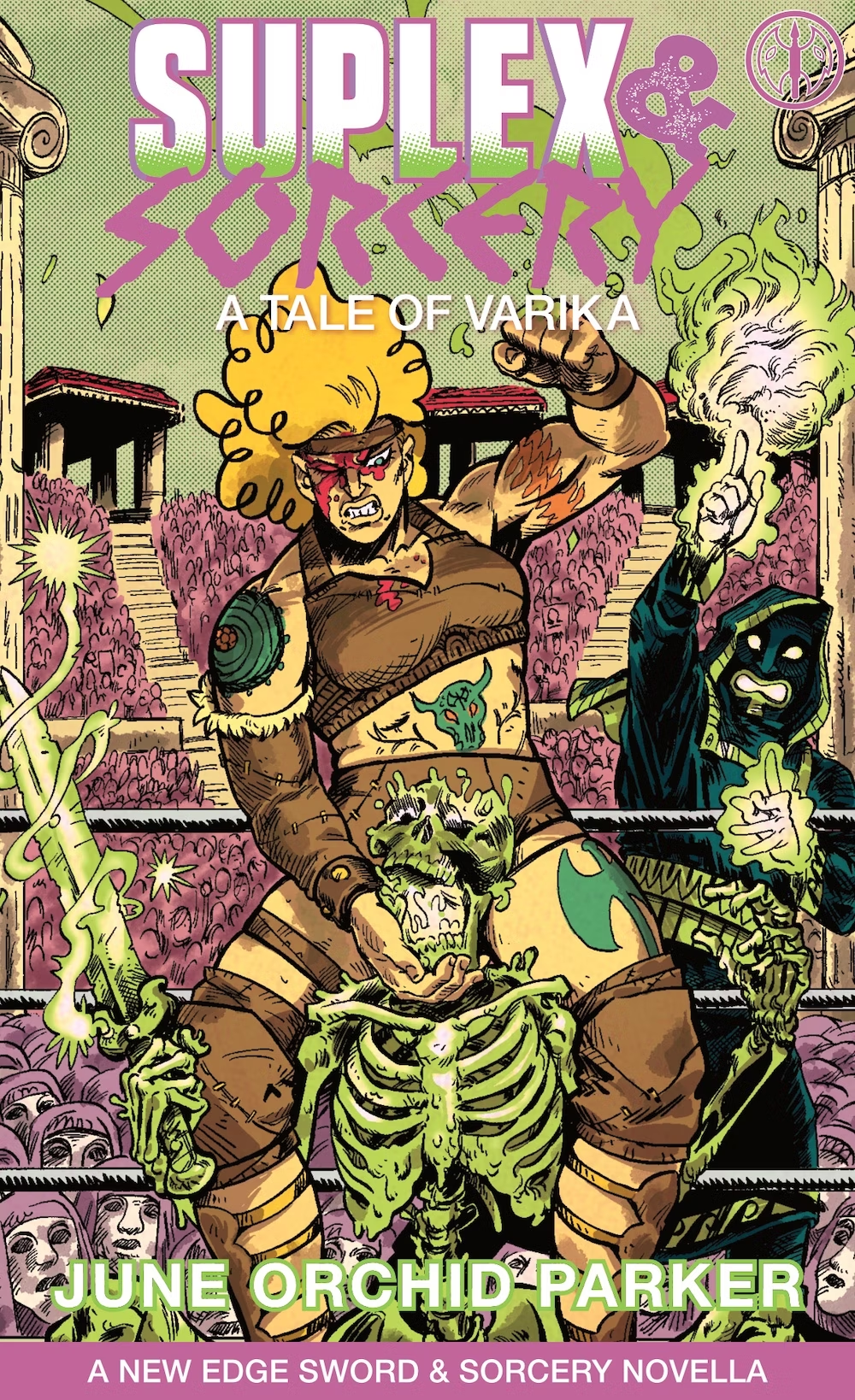
“…In other words, the story really is a love letter to professional wrestling, and it shows, in a lighthearted and fun way, how a wrestling league might form in a sword and sorcery city.”

My favorite stories from July and August feature a hungry ghost, a brain implant gone awry, and an gardening challenge in a post-apocalyptic world.

Hole in the Sky, by Daniel H. Wilson, is an entertaining, pleasantly eerie, and occasionally scary adventure novel told from four perspectives about what is initially treated as first contact science fiction but is also connected with cosmic horror, and reawakening mythology. It may encourage readers to think a little more about different perspectives, and connecting with others, and even the nature of reality, but mostly it’s a fun page-turner (288 pages, slated for release Oct. 7).

No, the title probably doesn’t refer to what you think it does. Andrew Hiller’s Hornytown Chutzpah is an urban fantasy noir with a Yiddish twist, and the title refers to a demon-populated neighborhood that suddenly popped up beside Washington D.C., years prior, as sort of a colony of Hell. Think Who Framed Roger Rabbit?, but with horned-demons of Hornytown rather than the famous animated characters populating Toontown. That Zemeckis film, or Gary K. Wolf’s Who Censored Roger Rabbit? that inspired it, serves as a good reference for the tone of Hornytown Chutzpah: plenty of noir that leans into the tropes of the genre with humor. Urban fantasy noir and comedy are elements often mashed up as a subgenre, but two things make Hornytown Chutzpah stand out. First is the aforementioned Yiddish twist. Before the story begins, Hiller gives readers “The Ten Commandments according to Sol the Wise Guy” that already got me chuckling. And after the story’s end is a glossary of (some) Yiddish and Jewish terms that one finds in the book, with cleverly and humorously crafted definitions in Sol’s voice.

Beatrice (Teresa Catherine) travels the desert to an abandoned bunker, where she’s tucked away Bea (Sloane Cherry), her inner child. They spend the day together, doing all of their favorite things, before Beatrice makes the ultimate betrayal. Leaving the two changed forever.

As usual, readers who broadly enjoy the genre and styles of stories/authors will have a higher chance of loving the collection overall. But the book would also serve as a great entry point for people wanting to try out more from the genre, particularly with the cohesive strength and interesting dichotomy that this anthology holds.